
11 min read· 9/27/2023
Share

Ubisoft’s Rider’s Republic
Gamers around the world, from enthusiasts to casual players, have been vocalizing a desire for a transformative change in the video game landscape. There’s a growing realization that gaming can be more than what it is today, a belief that it can transcend its current boundaries and offer experiences that are truly groundbreaking.
In the comment sections of game trailers and forums, you’ll encounter a common refrain, a longing for innovation and a lament for the repetition that has come to define some corners of the gaming world:
“Every year they make the same game.”
“Had an opportunity to make something great but instead went for a shallow money grab.”
“Nice, another remastered sequel. Exactly what we wanted.”
As we explore the potential in new games, there’s an underlying question that begs to be answered. What is it that’s missing in games today? Why do many new titles seem more akin to casino games than the immersive experiences we crave?
Join us as we delve into this elusive dream, to understand why the gaming industry stands at the crossroads of transformation, and show a move toward a future where gaming transcends the boundaries of static menus and propels us into the immersive, expansive worlds we’ve yearned for.
Picture This
The yearning for a gaming revolution isn’t merely a cry for change; it’s a call to redefine what gaming can be. The core of this vision lies in the concept of expansive, immersive open worlds that shatter the confines of traditional 2D menus. A gaming experience where, from the moment you log in, you are seamlessly transported into a living, breathing virtual environment, where the game world is as dynamic as reality itself.
This is not a distant dream. The technology to make this possibility a reality is already at our fingertips: Ray tracing has transformed the way we perceive in-game visuals, ushering in a new era of realism. Virtual reality (VR) offers an optional yet captivating form of interfacing directly with games. Photogrammetry brings real-world objects and environments into digital spaces, blurring the lines between reality and the virtual. The tools are there, and the possibilities are endless.
But it’s not just about technology; it’s about empowering developers to create these experiences. Unreal Engine 5, a powerful tool in the hands of game creators, offers a user-friendly interface that streamlines the process of crafting expansive game worlds. The pieces of the puzzle are here, waiting to be assembled, but how, when and by who is anyone’s guess.
Crafting the Dream
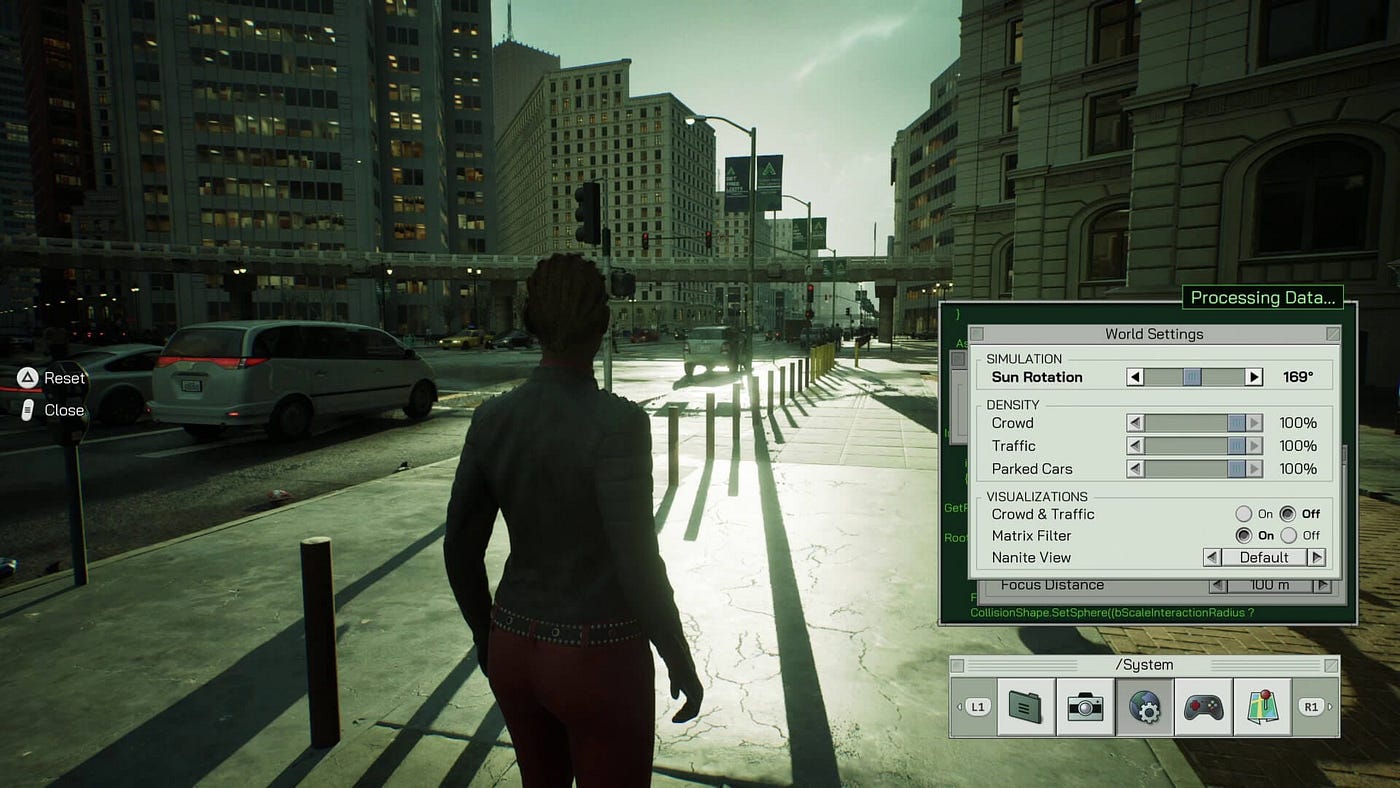
The Matrix Awakens: An Unreal Engine 5 Experience
Imagine logging into your favorite game, not to the repetitive beats of a menu soundtrack, but to the captivating vistas of a boundless virtual world. Imagine a gaming world where our favorite titles break the constraints of 2D menus and boldly step into expansive, immersive open worlds. GTA online was (at first) a glimpse of what’s possible. For the time, it felt like the thriving metropolis was teeming with life, opportunities, and endless stories, but after 10 years the world became dull. How many cars and empty apartments can one really own?
Really take a step back and think of what’s possible with all of the tech and creativity in the video game industry: Whether you’re stepping into the bustling streets of a virtual city, launching into the cosmic expanse of a space adventure, exploring the gritty urban landscapes of a GTA-style metropolis, or immersing yourself in the enchanting realms of a fantasy epic, each login transports you to a realm of endless possibilities. In this expansive universe, your avatar is meticulously crafted, respectfully reflecting your unique style, personality, and culture. No longer are you a passive observer; you’re an active participant in a dynamic world.

The since dated 2013-era wardrobe from GTA V
At the core of these new worlds are customizable clubhouses, your virtual sanctuaries. They’re not just decorative; they’re extensions of your gaming identity. Trophies, achievements, and personal mementos adorn the walls, telling the story of your in-game journey. Invite friends over, engage in strategic discussions, or simply unwind in each other’s virtual company. It’s more than just a game; it’s a gathering place for kindred spirits.
Beyond these personal spaces, the virtual world is alive with activity. AI-driven characters roam the streets, providing opportunities for spontaneous interactions. These AI entities are more than mere automatons; they’re interactive, context-aware companions that bring the virtual world to life. You might stumble upon a spontaneous street soccer match, join a thrilling race, or even have a casual chat with an AI character who’s remarkably attuned to your in-game experiences.

TmarTn2 talking to gpt-driven NPCs
But the magic doesn’t stop there. We can see this in the recent GPT-integrated NPCmodifications in the Unreal Engine 5 Matrix sandbox. These NPCs are absolutely astounding and eerily person-like; something absolutely impossible just a few months, let alone years ago. The AI entities enhance interactions, providing rich, meaningful conversations that adapt to your actions and choices. A level of immersion that transcends anything we’ve known in gaming thus far.
However, we have to make sure we don’t compromise on ethics. Microtransactions are designed to enhance personalization, offering cosmetic items that allow players to express themselves without affecting fair competition. The focus is squarely on enriching the player’s experience, rather than capitalizing on their wallets. Ethical game design is non-negotiable. Monetization practices must enrich the player experience, not hinder it. The focus should always be on fostering a deep connection between players and the worlds they explore.
These principles can extend to every genre, from sports simulations to shooters, space exploration, and historical reimaginings. It’s not just a transformation of games; it’s a reimagining of how we experience them.
To me, it’s clear. The technology is ready, and the potential is boundless.
Exploring the Frontier

FIFA 2022 Volta Cape Town
Let’s turn our attention to the vast frontier of potential contenders and the uncharted territories that lie within both existing and future games. I’ve always said that FIFA (now EA FC) has enormous potential for this sort of overhaul, but I don’t see it coming anytime soon. With the title’s new triangular shaped marketing foray, perhaps one day EA will point to a more substantial change to the series. The company had hinted towards the FIFA organization holding them back from creating more “experiences” their fans want. We’ll see if they just meant FIFA was hindering EA’s future brand partnerships. I’m personally hopeful about the franchise’s potential, perhaps it simply requires an outsider’s perspective to unlock it.

FIFA 2022 Volta New York City
Imagine this: The soccer field could undergo a radical transformation, evolving into a bustling hub where players not only compete but also socialize, strategize, and immerse themselves in a world beyond the confines of matches. Picture a virtual soccer universe where you can gather with friends in your clubhouses, host virtual watch parties for major tournaments, or even engage in friendly matches on the streets of your customized neighborhood. With all of the talent, know-how, and money it’s obvious that EA could make this a reality.
When I first launched FIFA 2022, I was greeted by an astonishing opening sequence that left me both mesmerized and hopeful. The game’s initial moments unfolded in the glamorous heart of Paris, where David Beckham casually sipped coffee in a glitzy hotel. My excitement soared as the scene transitioned to a room in the same building, offering the prospect of a unique avatar selection process guided by the French freestyler, Lisa Zimouche. Dribbling through the vibrant streets of the French capital, I couldn’t help but wonder what this could feel like as an online multiplayer experience.
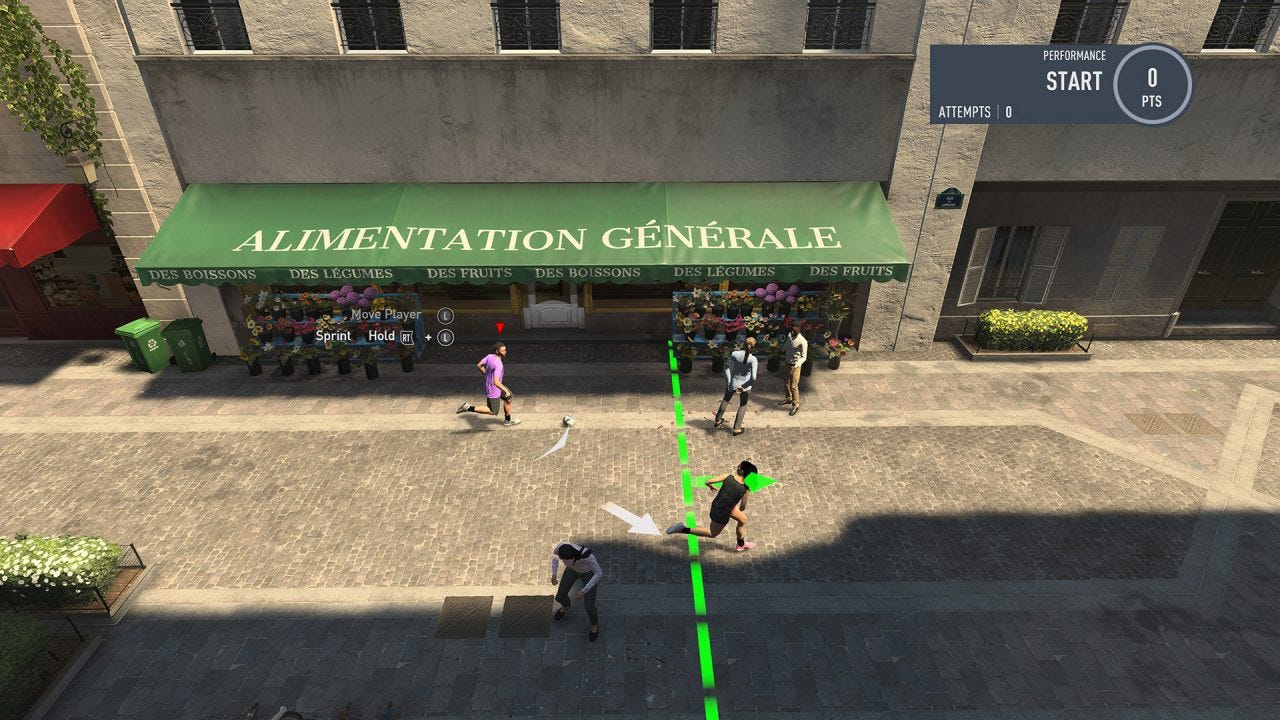
FIFA 2022 opening sequence in Paris
I was eventually led to the Le Parc des Princes, where I engaged in drills alongside the likes of Kylian Mbappé and Thierry Henry. Awesome. From there, a visit to a luxurious Parisian tailor beckoned, where I could fine-tune my appearance before taking my place in the coveted box seats of PSG’s stadium. Surrounded by icons like Lewis Hamilton and Anthony Joshua, their digital personas meticulously crafted, I couldn’t shake the feeling that this was a world brimming with untapped potential.
However, my initial excitement gradually gave way to disappointment. While FIFA 2022’s opening hinted at a grander, more extensive world waiting to be explored, it turned out to be merely an introduction with no substantive follow-through. As I launched the game again in 2023, there was no such brilliantly orchestrated intro to be found. FIFA 2022 had not delivered any extension of the promised expansive career mode, nor did it introduce anything remotely related to an online career mode, or even within something like their Pro Clubs mode (their 11v11 competitive mode)

Created character meets David Beckham in FIFA 2022
Adding to the disappointment, FIFA 2023 lacked even the introductory sequence as seen in 2022, which might have been attributed to the company’s transition to the new EA FC line, along with all the potential shakeups for the company. Unfortunately, it appears that in EA FC 24, this pattern is set to persist. Though I am hopelessly optimistic that one day we’ll see more done for soccer video games than the wallet devouring time-suck that is Ultimate Team, hope for a broader, more immersive open soccer world is likely to remain an elusive dream, forever overshadowed by the repetition of EA’s established formula.
Just remember, the responsibility isn’t solely on the shoulders of game designers; we, the gaming community, wield immense influence over this evolution. Our collective voice can steer the course of game development, demanding experiences that remain true to the core values of immersion, engagement, and ethical gameplay.
Navigating The Past
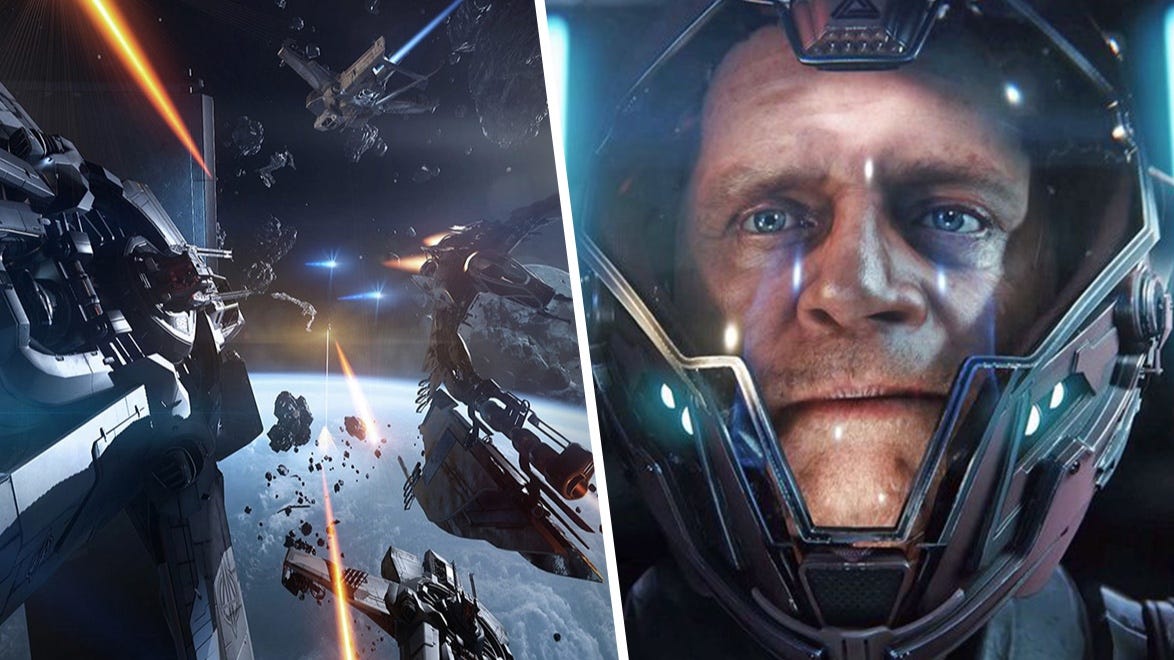
Star Citizen from Cloud Imperium Games
In the pursuit of expansive and immersive open worlds, it’s imperative that we learn from past attempts and acknowledge the lessons they offer. While some games have hinted at the potential of this vision, they have also encountered significant challenges and, at times, fallen short.
Consider Star Citizen, an ambitious undertaking that promised to redefine space exploration in gaming. It showcased stunning visuals and promised vast, player-driven experiences. However, it has also faced a rocky development path, marred by delays and funding controversies. The promise is there, but the execution remains a challenge.
Riders Republic, another title that hinted at the possibilities, offered a sprawling open-world environment for extreme sports enthusiasts. While it provided moments of exhilaration, it also struggled to maintain player engagement over time, leaving its world feeling somewhat empty. It also lacks a clubhouse system and player-to-player interaction feels shallow. Though I will admit, its incorporation of players’ “ghosts,” visible performing your actions long after you’ve logged out, was a brilliant concept at the time and significantly prolonged the world’s lifespan.
And then there’s the cautionary tale of the NBA 2K series. While it attempted to create open-world social experiences, it stumbled in multiple ways. High latency, crappy graphics, poor optimization on capable modern consoles, and shameless advertising campaigns were just the tip of the iceberg. The worst offender was the inclusion of pay-to-win elements, requiring players to shell out substantial sums to remain competitive online.
There are some important honorable mentions that stand out as positive examples of immersive experiences that minimize the use of traditional menus such as ‘Death Stranding,’ ‘Red Dead Redemption 2,’ and ‘The Legend of Zelda: Breath of the Wild’. All great games everyone should play.
A Brighter Horizon for Gaming

Early screenshot of EA’s skate.
The world of video games needs to evolve, transcend its current limitations and elevate itself into a realm of richer, more immersive experiences. Gamers around the globe have every right to expect more from an industry that has the potential to shape the future of entertainment.
Gaming should no longer be synonymous with uninspired sequels or repetitive gameplay loops. It should signify a new paradigm of interactive entertainment where every login feels like an invitation to explore a dynamic and immersive world.
But remember, we have to get the gaming industry to prioritize ethical game design, and ensure that microtransactions enhance personalization rather than hinder fair competition. It’s an industry’s responsibility to enrich players’ experiences, not exploit their wallets.
Games should be inclusive, accessible, and adaptable across genres. Inclusivity and accessibility must be at the forefront of this transformation. Gaming should be a space where all are welcome, regardless of background or ability. It’s a testament to the industry’s maturity that we prioritize inclusivity and make gaming a space for everyone. Whether you’re a sports enthusiast, an explorer of the cosmos, or a hero in a fantasy realm, the grand vision should cater to all.
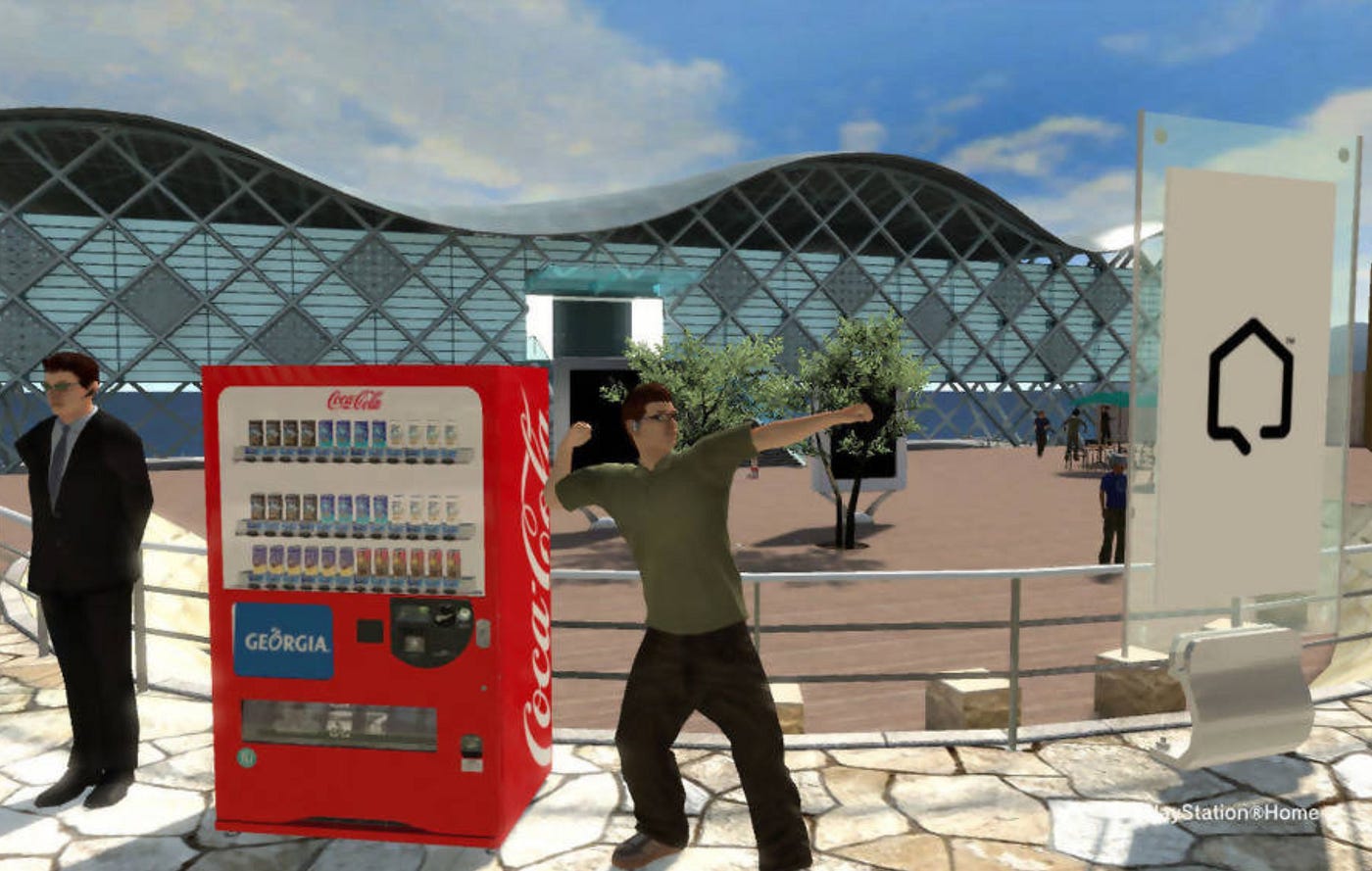
Striking a pose in Sony’s PlayStation Home
Games should be more than just solitary experiences. They should foster communities and connections, bringing players from different backgrounds and corners of the world together in shared spaces.
Remember PlayStation Home? The virtual social hub for PlayStation users was a captivating experiment in the gaming world. Its discontinuation left a void that many gamers cherished so much, that, in an act of community like no other, they made a clone of the game. PlayStation Home enabled players to connect, socialize, and customize their virtual spaces, all with fewer menus and a distinct sense of community within the PlayStation ecosystem. PlayStation Home underscores the potential for immersive, social experiences in gaming, even if the execution was imperfect.

EA’s FC 2024 and their infamous triangle
Hopefully EA might see this because the new Skate game and all of the upcoming EA sports titles could use these design principles. The fans are ready for change.
We invite readers to reflect on the transformative potential of gaming. It’s not just a pastime; it’s a frontier of human experience. We call upon gamers, developers, and enthusiasts to engage in this conversation about the industry’s evolution actively. Be a part of this exciting journey toward a new era of video games, where innovation knows no bounds.
Stay tuned and keep your eyes peeled for our latest articles at LoutherVizion.com! We’re bringing you fresh insights and exciting content you won’t want to miss. Stay connected for updates!
 This is the portfolio website of brothers Alexander Louther and Maximilian Louther.
Leave a comment